
Who can sue for wrongful death in California? Typically, only specific individuals listed in the state’s probate code, primarily the surviving spouse, domestic partner, and children, have the right to file a lawsuit when a loved one dies due to another party’s negligence.
While this hierarchy seems straightforward, the question of who can sue for wrongful death in California often becomes complex when dealing with stepchildren, unmarried partners, or financially dependent relatives who believe the legal system has left them behind.
When a family is grieving the loss of a provider or companion after a fatal accident on Highway 101 or a tragic incident in Santa Barbara, determining legal standing is often the last thing on their minds.
Yet, insurance companies and defense teams look for any technicality to dismiss a claim before it even begins. They know that if the wrong person files, or if a legitimate heir is excluded, the entire case can unravel.
Legal insights from a Santa Barbara wrongful death lawyer help clarify these rigid statutory requirements. By identifying the proper plaintiffs early and establishing their right to sue, legal counsel positions the family to pursue justice for their loss without the fear of procedural dismissal.
Key Takeaways About Wrongful Death Standing
- Strict statutory hierarchy: Under California Code of Civil Procedure 377.60, the right to sue follows a specific order: surviving spouses and domestic partners first, followed by children and grandchildren. A lawyer ensures that the claim includes all eligible parties to prevent future disputes over settlement distribution.
- The “Putative Spouse” Exception: If you believed in good faith that you were validly married, even if the marriage was technically void (due to a paperwork error, for example), you may still have standing as a “putative spouse.” Legal counsel can gather the necessary evidence to prove this good-faith belief to the court.
- Financial Dependence Matters: Individuals who do not fit the traditional mold of “heir,” such as parents or stepchildren, may still have standing if they can prove they were financially dependent on the deceased. A wrongful death attorney works with financial experts to document this support and establish legal standing.
- One Action Rule: California generally follows a “one action rule” for wrongful death, meaning all heirs should ideally join a single lawsuit. If an heir is omitted, the defendant can’t be sued again, but the omitted heir can sue the original plaintiff. Attorneys manage this complexity to protect the family from internal legal conflict.
What is the Priority of Heirs in California Wrongful Death Cases?
The law does not allow just anyone who loved the deceased to file a lawsuit. The priority of heirs in California wrongful death cases is set by statute, and the courts strictly enforce it. This hierarchy is designed to ensure that those closest to the deceased—legally and biologically—are the ones who recover damages.
The First Tier: Spouses and Children
The first group with automatic standing includes:
- The surviving spouse.
- The registered domestic partner.
- Children of the deceased.
- Grandchildren (if the deceased’s children are already deceased).
For a nuclear family, this is usually simple. However, complications arise when there are estranged spouses, children from prior marriages, or unregistered domestic partnerships.
A Santa Barbara wrongful death lawyer examines family trees and marriage certificates to ensure the lead plaintiff has the undisputed right to file.
The Second Tier: Parents and Siblings
If there is no surviving spouse, domestic partner, or children, the right to sue passes to the next line of heirs under California’s laws of intestate succession. This typically means the parents of the deceased. If the parents are no longer living, siblings’ wrongful death claims in California become possible.
This secondary tier often faces aggressive challenges from defense teams who argue that siblings or parents did not suffer a compensable financial loss, especially if the deceased was an independent adult.
The “Putative Spouse” Wrongful Death Claim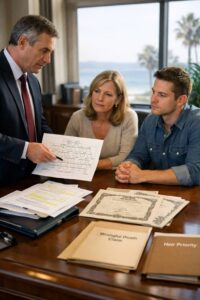
California law recognizes that marriage paperwork isn’t always perfect. A putative spouse wrongful death claim allows someone to sue if they had a “good faith belief” that they were validly married to the deceased, even if the marriage was legally void or voidable.
This often happens in situations where:
- A previous divorce was not finalized before the new marriage.
- There was a technical error in the marriage license application.
- A ceremony took place, but the officiant failed to file the paperwork.
Proving this “good faith belief” requires more than just saying you and the deceased thought you were married. It involves showing evidence of a shared life, such as joint bank accounts, shared tax returns, and testimony from friends who viewed the couple as husband and wife.
Legal representation from a Santa Barbara wrongful death attorney is vital here to build a narrative that satisfies the court’s strict standards for this exception.
Standing to Sue for Domestic Partners
Registered domestic partners have the same rights as spouses in wrongful death cases. However, confusion often arises for partners who never formally registered their partnership with the Secretary of State.
Domestic partner standing to sue for wrongful death can be precarious for unregistered couples. Generally, if you were just living together (cohabiting) without registration, you do not have automatic standing, regardless of how long the relationship lasted.
There is a narrow exception. If the surviving partner can prove they were financially dependent on the deceased and meet specific cohabitation requirements, they might still qualify.
Establishing this requires a thorough analysis of financial records to show the court that the partner relied on the deceased for life’s necessities.
When Can Parents Sue for the Death of a Child?
The loss of a child is unimaginable, and the laws regarding a parent’s right to sue for wrongful death in California depend heavily on the child’s age and marital status.
- Minor children: Parents generally have the right to sue for the wrongful death of a minor child.
- Adult children: If the adult child had no spouse or children of their own, the parents have standing.
- Married adult children: If the adult child was married or had kids, the parents typically do not have standing unless they can prove they were financially dependent on that child.
This distinction often catches families off guard. A parent who relied on their adult child for help with rent or medical bills may have a claim, but they must produce hard evidence of that support.
Minor Child as Heir in California Wrongful Death Lawsuit
When a parent dies, a minor child as heir in California wrongful death cases has a clear right to recovery. These claims are particularly high-value because they encompass not just the loss of financial support until adulthood, but also the loss of parental guidance, love, and companionship.
Because minors cannot legally file a lawsuit on their own, a guardian ad litem (usually the surviving parent or a relative) must be appointed by the court to represent the child’s interests.
Attorneys handling these sensitive cases focus on securing the child’s future. This often involves structuring settlements into trusts or annuities that provide for the child’s education and living expenses long after the legal case concludes.
Stepchildren and Wrongful Death Standing
Stepchildren occupy a gray area in California law. Generally, unadopted stepchildren do not have an automatic right to sue for a stepparent’s death.
However, stepchildren and wrongful death standing can be established under the financial dependence provisions of the statute.
If a stepchild can prove that the deceased stepparent provided financial support, such as paying for school, housing, or food, they may be eligible to join the lawsuit. This is common in blended families where the stepparent was a primary breadwinner.
Defense attorneys often fight these inclusions vigorously, arguing that the biological parent should be the sole source of support. A lawyer counters this by presenting a clear picture of the family’s actual financial dynamic, ensuring the stepchild isn’t unfairly excluded.
Proving Financial Dependence
For many potential plaintiffs, including parents, stepchildren, and unregistered partners, standing hinges on proving dependency in a wrongful death case. The law defines “dependent” narrowly; it usually implies relying on the deceased for the necessities of life, such as shelter, food, and clothing.
Documentation is key. A wrongful death attorney works to compile:
- Bank Statements: Showing transfers or payments for bills.
- Lease Agreements: Showing shared housing costs paid by the deceased.
- Tax Returns: Listing the plaintiff as a dependent.
Simply receiving gifts or occasional help is rarely enough. The legal threshold requires showing that without the deceased’s support, the survivor’s standard of living would suffer.
Wrongful Death Claims vs. Survival Actions
While often filed together, wrongful death claims and survival actions in California are distinct legal vehicles with different rules about who can sue and what damages are recoverable.
- Wrongful death: Compensates the survivors for their loss (loss of support, companionship, love).
- Survival action: Compensates the estate for losses the deceased suffered before death (medical bills, lost wages, pain and suffering, if applicable).
The personal representative of the estate files the survival action. Sometimes this is the same person as the wrongful death plaintiff, but not always.
Understanding the difference is critical because survival action proceeds are distributed according to the deceased’s will (or intestate laws), whereas wrongful death proceeds go directly to the eligible heirs.
FAQs About Recovering Damages in California Wrongful Death Cases
What types of damages can heirs recover in a wrongful death case?
Heirs may recover both economic and non-economic damages. Economic damages include financial support the deceased would have provided, the value of household services, and funeral expenses. Non-economic damages cover the loss of love, companionship, and, for spouses or registered domestic partners, the loss of sexual relations.
How are wrongful death settlements divided among multiple heirs?
When multiple heirs, such as a spouse and children, are involved, California courts typically issue a lump sum settlement. The heirs must then agree on how to divide the funds. If disputes arise, a judge may determine each heir’s proportional loss. Legal counsel helps manage these dynamics to avoid family conflict.
What is the statute of limitations for filing a wrongful death claim in California?
The general deadline is two years from the date of death. However, exceptions exist, such as cases involving government entities, which may have a six-month deadline. Delays in resolving family disputes over who should file can jeopardize the claim, making early legal action critical.
How does California’s community property law affect wrongful death settlements?
While lost wages may be considered community property, damages for loss of companionship are often treated as the surviving spouse’s separate property. Legal guidance is essential when children or other heirs are involved to navigate these complexities and protect the settlement.
Can an unmarried partner recover damages in a wrongful death case?
Unmarried partners generally lack standing unless they can prove financial dependence on the deceased. In some cases, alternative claims, such as bystander claims for witnessing the accident, may provide a path to recovery. A lawyer can explore all potential options for justice.
Take Action for the Loss of a Loved One With the Help of Experienced Wrongful Death Attorneys in Santa Barbara, California.
The loss of a loved one leaves a void that no lawsuit can fill. But the law provides a mechanism to secure your family’s financial stability and the acknowledgement of loss that they deserve. Understanding your rights under the California Code of Civil Procedure 377.60 is the first step toward that stability.
You do not have to navigate probate codes, insurance statutes, and defense tactics alone. The legal questions regarding who can file are complex, but the answer often opens the door to the support you need.
Are you ready to understand your rights and protect your family’s future? Contact Nye, Stirling, Hale, Miller & Sweet LLP today. Our Santa Barbara wrongful death lawyers are ready to listen to your story and help you determine the most appropriate legal path forward during a free case evaluation.