
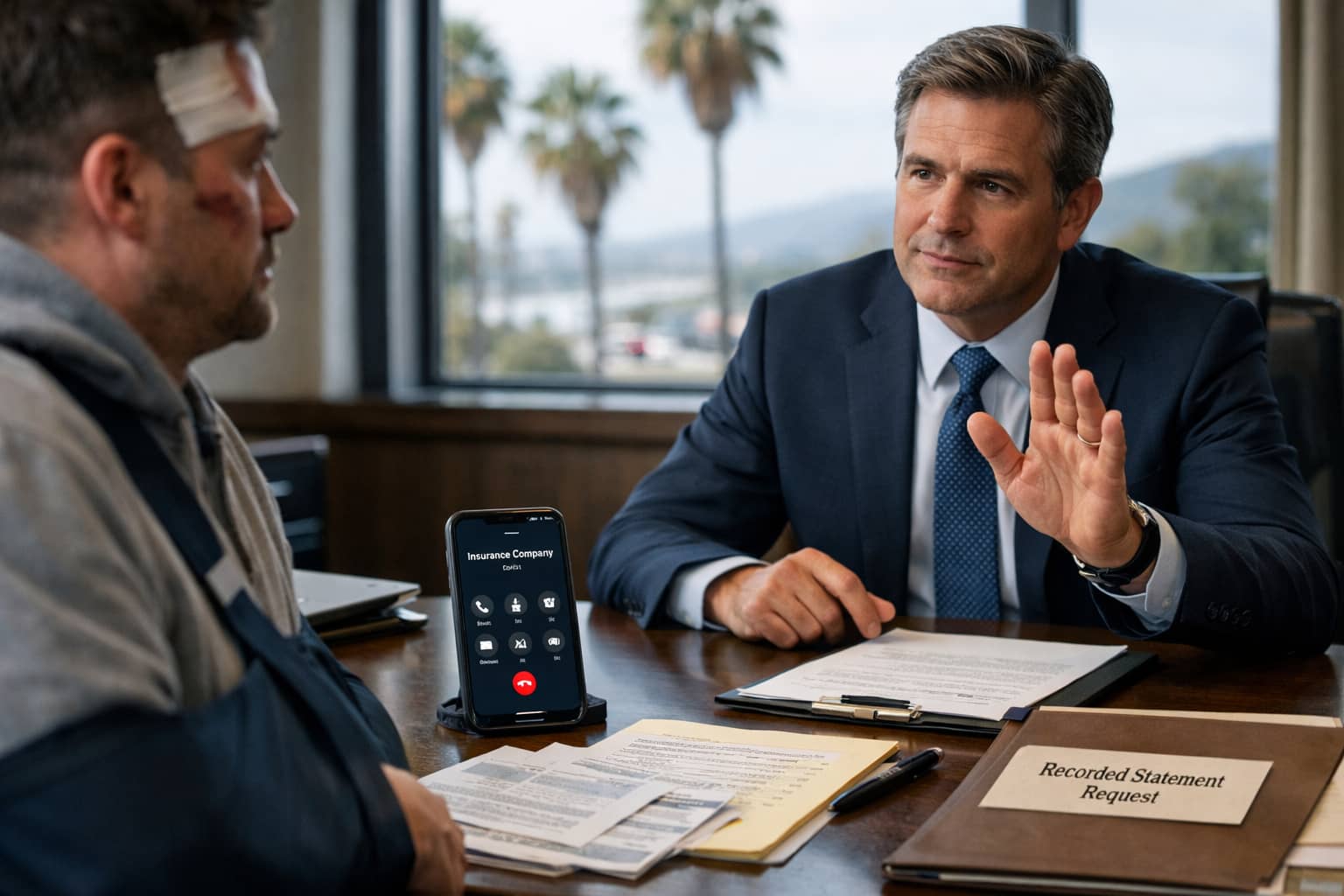
Insurance adjuster tactics often use your politeness and desire for a quick resolution against you. By appearing friendly and cooperative, they can extract statements that devalue your claim or shift blame to you.
When you are hurting, stressed about missing work, and watching medical bills pile up on the kitchen counter, the friendly voice on the phone feels like a lifeline. An adjuster calling to “check in” or “see how you’re feeling” seems like a gesture of goodwill.
Unfortunately, in the world of insurance claims, this conversation is rarely just a chat. It is a strategic interaction designed to protect the insurance company’s bottom line.
A Santa Barbara personal injury lawyer can provide the shield you need, handling these complex communications so you don’t accidentally bargain away your rights while trying to be polite. During a free case evaluation you can learn how the following legal insights may affect your recovery.
Key Legal Insights for California Accident Claims
- California’s “pure comparative negligence” system allows you to recover damages even if you’re partially at fault, but your percentage of responsibility will reduce your compensation. A lawyer can help minimize this impact by building a strong case.
- You are not required to provide a recorded statement to an insurance adjuster immediately after an accident. These statements can be used to lock you into a version of events that may harm your claim. Consult an attorney before agreeing to one.
- California law requires insurers to act in good faith, meaning they cannot unreasonably deny claims, delay payments, or misrepresent coverage. If you suspect bad faith practices, a lawyer can hold the insurer accountable and protect your rights.
The “Friendly Adjuster” Persona is a Professional Tactic
Insurance adjusters rarely sound harsh or uncaring. Most are trained to be warm, patient, and understanding. They might chat about your family, express sympathy for your situation, or even sound shocked about the cost of medical treatment. This puts many people at ease.
Once you relax, it’s common to share more than you need to or downplay how bad things really are. Little apologies or casual remarks can end up in a file. In a personal injury claim, polite conversation often gets turned into evidence by the insurance company.
Here are some specific ways adjusters use friendliness as a tactic:
- Asking open-ended questions to encourage long answers
- Offering sympathy to get you talking about your injuries or fault
- Making statements like, “We just want to help,” to build trust
- Seeming rushed to close your claim quickly
- Reminding you they “just need your side of the story” to encourage a recorded statement
These strategies are meant to lower payouts and limit claims. Knowing about them helps protect your case. Our legal team understands these tactics and can handle communications for you, helping prevent mistakes that could cost you.
Why “I’m Fine” Can Cost You Thousands
Imagine this: the day after a car accident, an insurance adjuster asks, “How are you holding up?” Without thinking, you respond, “I’m okay” or “I’m doing better.” It feels natural to say this—it’s polite, and you don’t want to sound like you’re complaining. Plus, adrenaline might still be masking your pain.
But to an insurance company, “I’m okay” isn’t just small talk. It’s evidence. They can use it to argue that your injuries aren’t serious or even related to the accident.
Weeks later, if an MRI reveals a herniated disc or another serious injury, they may point to your earlier words to downplay your claim.
Here’s how this tactic works:
- Polite phrases become admissions: Saying “I’m fine” or “I’m okay” can be twisted to suggest you weren’t injured.
- Adrenaline masks injuries: Immediate pain levels don’t always reflect the full extent of your injuries.
- Future evidence is ignored: Adjusters may use your early statements to argue that later medical findings are unrelated.
These small, polite comments can cost you thousands in medical coverage and compensation. A Santa Barbara personal injury lawyer can help ensure your words aren’t misinterpreted, protecting your rights and the value of your claim.
The Trap of the Recorded Statement
California insurance adjusters often ask for a recorded statement early in the claims process. They might say, “We just need your side of the story to start processing these bills.” It sounds simple and reasonable, especially when you’re eager to move forward. But agreeing to this too soon can harm your claim.
What they don’t tell you is that you’re usually not legally required to provide a recorded statement right away. These statements are often used to lock you into a version of events before you fully understand the situation.
In the days after an accident, you may not yet know the full extent of your injuries or have all the facts about what happened. Guessing about details like speed, timing, or distance can create inconsistencies that weaken your credibility.
If you’ve spoken to an adjuster who used phrases like “In your own words, tell me what happened” or “Are you in any pain right now?,” it’s time to consider speaking with an attorney. A lawyer can handle these conversations, ensuring your rights are protected and your claim is positioned for success.
The “Quick Check” Settlement Offer
Insurance adjusters often present early settlement offers as a way to “help you move on.” They might say, “We want to close this file and get a check in your hands so you don’t have to worry about these bills.”
To someone facing mounting expenses, this can feel like a lifeline. But these offers are rarely in your best interest.
Accepting the first settlement offer often means leaving money on the table. Once you sign a release, your case is closed forever—even if new injuries or expenses come to light later.
Insurance companies use these quick offers to minimize payouts, knowing that financial stress can push people to settle for less than they deserve.
Here’s why the first offer is rarely the best:
- Limited scope: Early offers often cover immediate medical bills but ignore long-term costs, such as ongoing treatment or lost wages.
- No second chances: Once you accept, you can’t reopen the claim—even if new injuries are discovered.
- Pressure tactics: Adjusters capitalize on your financial stress and desire to “move on” to settle for less than the claim’s true value.
If you’ve been offered a quick settlement, it’s worth consulting with a personal injury lawyer. They can evaluate the full scope of your damages, including future medical needs and lost earnings, to ensure you’re not shortchanged. Protecting your financial future starts with understanding the true value of your claim.
Comparative Negligence: The Blame Game
California’s “pure comparative negligence” system allows you to recover damages even if you’re partially at fault, but your percentage of responsibility reduces your compensation. Insurance adjusters often use this law to shift blame onto you, reducing their payout.
Politeness can make you vulnerable to these tactics. For example, if a car turns left in front of you and causes a collision, you might say to the adjuster, “I slammed on my brakes, but I just couldn’t stop in time. I feel terrible.” Adjusters can twist these words to weaken your claim.
Here’s how they do it:
- “I couldn’t stop” might be used to suggest speeding or faulty brakes.
- Expressions of regret, such as “I feel terrible,” could imply guilt.
- Shifting focus from the other driver’s actions to yours creates doubt about liability.
What should have been a clear case of fault can quickly turn into a debate, reducing your compensation. A personal injury lawyer can counter these strategies by focusing on evidence like skid marks, black box data, and traffic laws. They ensure your words aren’t misinterpreted and help protect the full value of your claim.
The “Authorization” Form Strategy
Insurance adjusters often send paperwork to process your claim, including a Medical Authorization Form. They present it as a routine step to verify your injuries and pay your bills. While they do need proof of your injuries, these forms are often overly broad, requesting access to your entire medical history—not just records related to the accident.
Here’s why they want your full history:
- Pre-existing conditions: They look for old injuries or complaints to argue your current issues aren’t related to the accident.
- Denial of coverage: If you mentioned back pain years ago, they might claim your current back pain is a flare-up rather than a new injury.
- Fishing expeditions: Broad authorizations allow them to search for anything that could reduce or deny your claim.
A personal injury lawyer can limit the scope of these forms, ensuring only relevant records are shared. This protects your privacy and prevents insurers from using unrelated medical history to undermine your claim. By having an attorney handle these details, you can focus on recovery while safeguarding the value of your case.
Recognizing Bad Faith Insurance Practices
While many insurance tactics are aggressive but legal, some cross the line into “bad faith.” In California, insurers have a legal duty to handle claims fairly. This means they cannot unreasonably deny claims, delay payments without cause, or fail to investigate properly.
Here are signs of bad faith practices:
- Unexplained delays: Payments or responses are delayed without a valid reason.
- Lack of communication: Adjusters ghost you or fail to provide updates.
- Misrepresentation: Coverage details are distorted or misrepresented.
- Unreasonable denials: Claims are denied without proper investigation or justification.
Distinguishing between tough negotiation and bad faith can be challenging. A personal injury lawyer with experience on both sides of the courtroom can identify these tactics and hold insurers accountable. By understanding how insurance companies operate, they can challenge unfair practices and protect your rights.
Personal Injury Claim Lawyer FAQs
What if the insurance company denies my claim without explanation?
If your claim is denied without a clear reason, it could be a sign of bad faith practices. Insurance companies are required to provide valid explanations for denials. A personal injury lawyer can investigate the denial, challenge unfair decisions, and ensure your rights are protected.
How do I know if my injuries are worth pursuing a claim?
Even injuries that seem minor at first can lead to significant medical expenses and lost wages over time. A lawyer can evaluate your case, review medical records, and determine the true value of your claim, ensuring you don’t leave money on the table.
What if I can’t afford to hire a lawyer for my personal injury case?
Most personal injury lawyers work on a contingency fee basis, meaning you don’t pay unless they win your case. This allows you to access legal representation without upfront costs, ensuring you have the support you need to secure fair compensation.
How long do I have to file a personal injury claim in California?
California law sets strict deadlines for filing personal injury claims, typically two years from the date of the accident. Missing this deadline can bar you from recovering compensation. A lawyer can ensure your claim is filed on time and meets all legal requirements.
Protect Your Rights and Your Recovery After Someone Else’s Negligence Causes You Harm in California
After an accident, insurance companies often rely on tactics designed to minimize your claim. They count on you being too busy, too polite, or too overwhelmed to push back. But you don’t have to navigate this process alone or accept less than you deserve.
Whether you’ve been in a car accident on Highway 101, a bicycle crash downtown, or a slip and fall, the principles remain the same: protect your rights, choose your words carefully, and work with someone who knows how to hold insurers accountable.
It’s time to take control. If you’re questioning whether the adjuster on the other end of the line is truly looking out for you, it’s time to bring in an advocate who will.
Let Nye Stirling Hale Miller & Sweet handle the negotiations, paperwork, and strategies designed to protect the value of your claim. Schedule a free personal injury legal consultation at our Santa Barbara office—available evenings and weekends.